
Durakool's Complete HVDC Line for EV Charging & BESS: Contactors, Relays, and Pre-Charge Resistors

Electric vehicle charging systems and battery energy storage systems require more than a single high-voltage switch.
Engineers must manage:
AC input isolation.
High-voltage DC switching.
Capacitive inrush current.
Arc interruption.
Contactor status.
Emergency disconnect requirements.
System-level compliance documentation.
Durakool’s EV charging and HVDC portfolio gives design engineers a coordinated set of components for these functions. The line includes the DE40 PCB power relay, CHV1000P and CHV800P HVDC contactors, DHVC300 contactor, and XV3 pre-charge/discharge resistors.
Together, these products support the design-in phase for EV chargers, BESS equipment, DC power distribution, and other high-voltage power electronics.
CTM Marketing serves as Durakool’s local component sales representative, manufacturers representative, and technical sales agency for the Rocky Mountain region.
Start With the System Architecture
A typical EV charger or BESS power path may include:
AC-side switching and safety control.
A pre-charge branch.
Main positive and negative HVDC contactors.
A DC-link capacitor bank, inverter, or charger module.
A discharge path for stored energy.
Auxiliary feedback for system monitoring.
Each component has a different job. The DE40 is not a replacement for an HVDC contactor. An XV3 resistor is not a replacement for a disconnect device. The contactors should not be expected to manage capacitor inrush without a properly designed pre-charge circuit.
Selecting these parts together helps the engineering team review the full switching sequence before the design is finalized.
DE40: PCB Power Relay for EV Charging and PV Systems
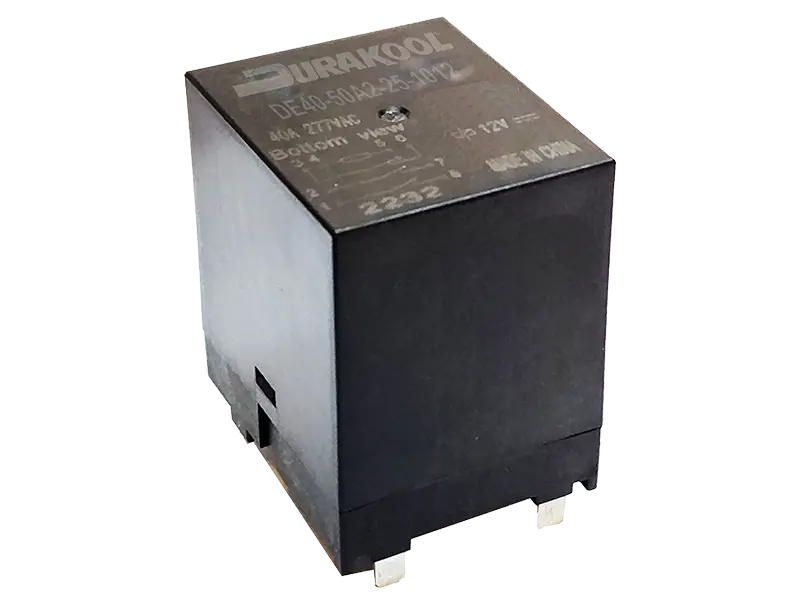
The Durakool DE40 is a miniature PCB-mount power relay designed for EV charging and PV systems.
Key verified features include:
DPST-NO contact configuration.
Switching capability of 2 × 40A up to 277VAC.
3.2mm contact gap for dielectric strength.
Compliance with IEC 62955.
Optional mechanically linked SPST-NC auxiliary contact for status monitoring.
The DE40 can support AC-side switching, safety circuits, control power routing, and feedback functions within a charging station or BESS control panel. Its optional auxiliary contact can provide a signal to help the controller verify relay status.
IEC 62955 applies to residual direct current detection functions used with EV charging equipment. The DE40’s compliance makes it relevant to engineers working on AC charging equipment and related protection architecture.
Use the DE40 datasheet to review the complete electrical, mechanical, and environmental requirements.
CHV1000P and CHV800P: High-Voltage DC Main Contactors
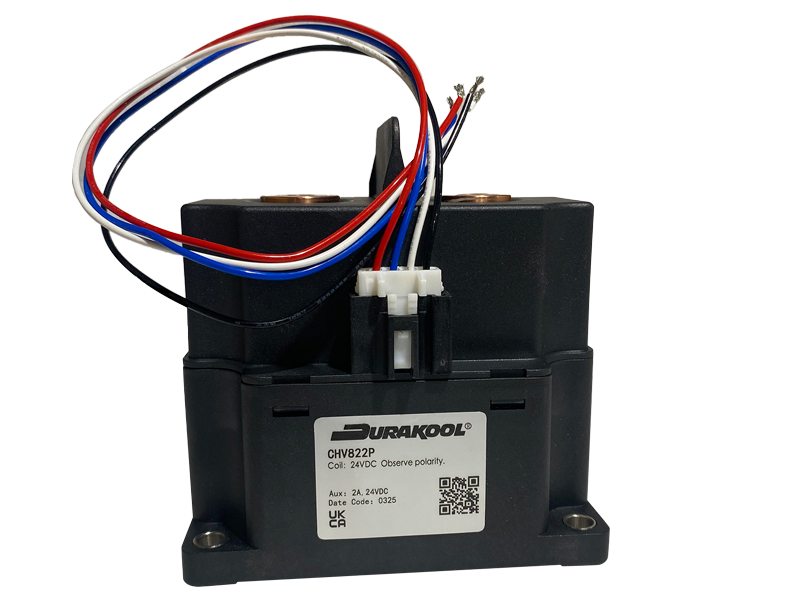
The CHV1000P and CHV800P are magnetic arc blowout HVDC contactors designed for high-current DC switching.
Both contactors are rated for switching up to 1500VDC. Their construction includes:
Oxygen-free copper contacts.
Inert-gas ceramic chambers.
Magnetic arc blowout.
Dual-coil economizers.
Auxiliary contact options or standard auxiliary contacts, depending on the model.
Verified CHV1000P details include:
1000A continuous current rating.
1500VDC rated contactor.
2000A maximum break capability.
M8 terminals.
UL recognized construction.
The CHV1000P is intended for applications requiring higher current capability than the CHV800P. The CHV800P provides a closely related solution for high-power EV charging and BESS systems.
DC interruption presents a different challenge from AC interruption. AC current naturally crosses zero during each cycle. DC current does not. Once an arc forms, it can continue until the contactor forces it to extinguish.
Magnetic arc blowout and a controlled, sealed ceramic chamber help manage that interruption environment. The inert-gas chamber also helps protect the internal contact system from oxidation and contamination.
These features make the CHV family suitable for review in:
High-power EV charging equipment.
Battery rack and string isolation.
DC bus disconnects.
Inverter and converter interfaces.
Renewable energy storage systems.
High-voltage industrial power equipment.
Review the CHV1000P datasheet and CHV800P datasheet before selecting a contactor for a specific voltage, current, breaking, and duty-cycle requirement.
DHVC300: 500A, 1000VDC HVDC Switching
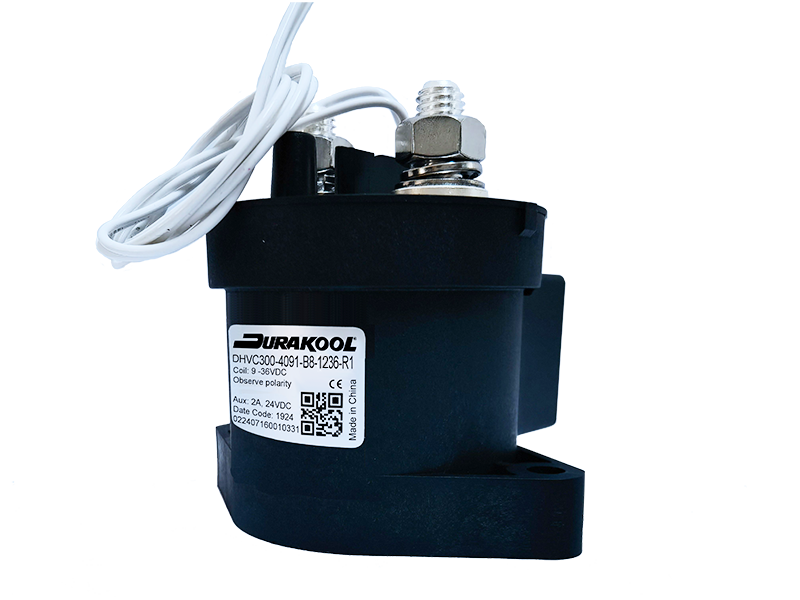
The DHVC300 is a magnetic arc blowout contactor rated for 500A and 1000VDC switching.
Its features include:
Oxygen-free copper contacts.
Sealed inert-gas construction.
Female M6 or male M8 power terminals.
Bottom or side mounting options.
Optional PWM or twin-coil economizers.
Optional auxiliary contact.
The DHVC300 can fit EV charging and BESS designs that require a high-voltage DC contactor at a lower maximum voltage than the CHV800P and CHV1000P family.
It may be evaluated for:
Battery subsystem disconnects.
DC/DC converter branches.
Auxiliary high-voltage circuits.
Medium-power charger architectures.
BESS rack or subsystem isolation.
Use the DHVC300 datasheet to confirm the required configuration and operating conditions.
XV3: Pre-Charge and Discharge Resistors
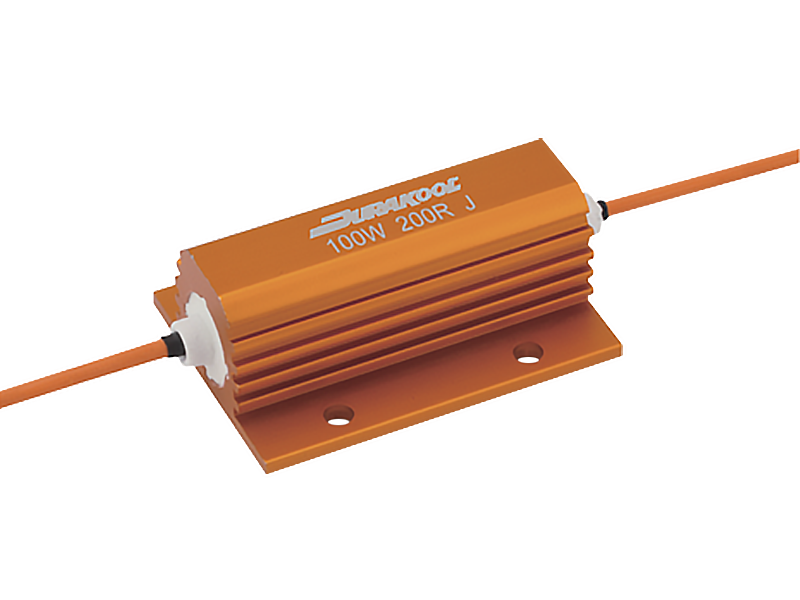
High-voltage DC systems often include significant capacitance in their DC link, inverter, or charger input. Closing a main contactor before managing that capacitance can create a damaging inrush current.
The Durakool XV3 series provides a controlled resistive path for pre-charge and discharge functions.
Verified XV3 features include:
100W power rating.
Resistance range from 10Ω to 250Ω.
AEC-Q200 qualified.
±0.5% tolerance.
Aluminium-housed construction.
High-voltage cables.
Intrinsically safe package.
Availability with non-inductive windings.
Intended for EV, HEV, and PHEV high-voltage applications.
In a typical pre-charge sequence, the XV3 resistor is connected through a pre-charge contactor before the main HVDC contactors close. The resistor limits current while the DC-link capacitors rise toward the battery or bus voltage.
After the voltage difference is reduced, the main contactors can close. The pre-charge branch is then opened or bypassed, depending on the system design.
During shutdown, a discharge circuit may use a resistor to reduce stored DC-link voltage. The exact resistor value and energy rating depend on capacitance, bus voltage, target pre-charge time, switching frequency, and discharge requirements.
Do not select a pre-charge resistor from resistance value alone. Review the complete transient and thermal profile. Start with the XV3 datasheet, then work with CTM and Durakool to verify the application.
How the Components Work Together
A coordinated HVDC switching sequence may look like this:
1. Confirm safe conditions
The system controller checks interlocks, insulation monitoring, emergency-stop status, and other required conditions.
The DE40 can support AC-side safety switching, control routing, and status feedback.
2. Close the pre-charge path
A pre-charge contactor connects the battery or DC source to the DC link through the XV3 resistor.
The resistor limits the initial current into the capacitors.
3. Verify bus voltage
The controller monitors the DC-link voltage. When the voltage reaches the required threshold, the main contactors can be closed.
4. Close the main HVDC contactors
The CHV800P, CHV1000P, or DHVC300 provides the primary high-voltage DC connection, based on the system voltage and current requirements.
5. Open the pre-charge branch
The pre-charge contactor opens or the resistor is bypassed. The main power path carries the operating current.
6. Disconnect under controlled conditions
During shutdown or a fault, the HVDC contactors open according to the control sequence. Their magnetic arc blowout and sealed chamber are designed specifically for the challenges of DC interruption.
The correct sequence depends on the application. Engineers must validate normal operation, emergency shutdown, fault current, contactor feedback, and stored-energy discharge.
Compliance Is a System-Level Design Activity
Component selection supports compliance. It does not replace system-level evaluation.
As discussed in CTM’s earlier post, “Looking for BESS Compliance? 10 Things to Know About UL 9540A and HV Contactors”, UL 9540A is a test method for evaluating thermal runaway fire propagation in battery energy storage systems.
It is not a certification for an individual relay, resistor, or contactor.
A BESS design may require consideration of:
UL 1973 for battery systems.
UL 9540 for energy storage systems.
UL 9540A test data.
NFPA 855 installation requirements.
Applicable electrical, fire, and local code requirements.
Component-level certifications and ratings.
Durakool components can contribute to the electrical protection and isolation architecture. The final compliance result depends on the complete system, enclosure, battery configuration, controls, protection devices, installation, and required testing.
Engineers should engage the appropriate certification bodies and Authority Having Jurisdiction early in the design process.
For additional context, review CTM’s Durakool CHV500 spotlight.
Why Work With CTM Marketing?
High-voltage component selection affects the PCB, busbars, enclosure, wiring, control software, thermal model, testing plan, and compliance documentation.
CTM Marketing supports engineers during the initial design-in phase. Our team helps match application requirements with Durakool products and coordinates technical questions, samples, datasheets, and manufacturer support.
We serve Arizona, Colorado, Idaho, Montana, New Mexico, Utah, and Wyoming.
As local manufacturers representatives, we provide:
Rocky Mountain territory knowledge.
Technical product guidance.
Design-in support.
Application review.
Target Sales Program planning.
Detailed opportunity follow-up.
Direct communication with the manufacturer.
If you are looking for a responsive technical sales agency or a qualified component sales representative for EV charging, BESS, or high-voltage power electronics, CTM can help.
Let’s Chat About Your HVDC Design
Durakool’s DE40, CHV1000P, CHV800P, DHVC300, and XV3 series give engineers a coordinated starting point for EV charging and BESS switching architectures.
Use the relay for the appropriate AC-side and control functions. Use the XV3 resistor to manage pre-charge or discharge energy. Use the HVDC contactor that matches the system voltage, current, breaking duty, mounting, and control requirements.
Then verify the complete design with the applicable datasheets and compliance requirements.
Let’s Chat!Contact CTM Marketing for Durakool datasheets, samples, application guidance, and design support in the Rocky Mountain region.
Comments