
Techno Waterproof Joint Connectors: Designing Reliable Connectivity for Harsh Environments

In harsh environments, a cable joint is more than a simple splice. It is part of the system’s environmental barrier, mechanical structure, and long-term reliability strategy.
Moisture, dust, vibration, temperature changes, wash-down procedures, ultraviolet exposure, and installation errors can all affect connectivity. If the joint is not selected and installed correctly, the result may be intermittent operation, insulation damage, corrosion, or a field service event.
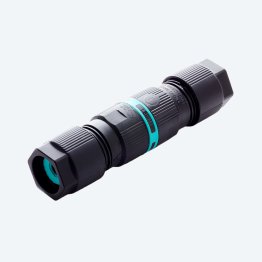
Techno’s waterproof joint connectors are designed for demanding cable-to-cable and branch connection applications. The product family includes in-line joints, T and Y junctions, compact connectors, junction boxes, and related accessories. Many configurations are available with protection ratings such as IP66, IP68, and IP69, depending on the specific product.
For design-in engineers, the key point is simple:
Select the joint connector as part of the system design: not as an afterthought during installation.
Why Waterproof Joint Connectors Matter
A cable connection creates several potential entry points for the environment. These include:
The cable jacket
The connector housing
The terminal or contact area
The sealing interface
The transition between the cable and connector
The installation opening or gland
A rugged joint connector must protect the electrical connection while maintaining mechanical stability around the cable. A strong environmental rating is useful only when the connector, cable, installation method, and application conditions are properly matched.
Techno’s joint connector range is designed to provide sealed connections without relying on resin or gel-filled assembly methods in many configurations. The connections can also be re-inspected or re-accessed, which can simplify troubleshooting and field service compared with permanent encapsulation methods.
Start With the Environment
Before choosing a part number, define the actual operating environment. “Outdoor” is not a complete specification.
Review the following conditions.
Water and immersion
Will the connection experience rain, standing water, buried installation, spray, or immersion? A connection located inside a protected enclosure may require a different solution than one installed underground or near a pump.
Review the product’s certified ingress protection rating. For Techno products, the relevant rating depends on the exact configuration. Verify the test conditions and installation requirements in the applicable technical documentation.
Dust and contamination
Dust can enter a poorly sealed joint and collect around terminals. In industrial applications, the contamination may also include metal particles, process residue, soil, or other debris.
The connector should be selected for the expected exposure. Cable diameter, sealing components, and housing interfaces must all be compatible.
Wash-down and cleaning
Food processing, industrial automation, agricultural, and infrastructure equipment may be exposed to regular cleaning. High-pressure or hot-water cleaning creates a different challenge from normal rain exposure.
If wash-down is part of the operating cycle, confirm whether the selected Techno configuration supports the required protection level and cleaning conditions. Do not assume that an IP rating alone defines suitability for every cleaning chemical or pressure profile.
Temperature cycling
Outdoor equipment in the Rocky Mountain region may face significant temperature changes. Repeated expansion and contraction can stress cable seals and housing interfaces.
Review the full operating temperature range for the selected product. Also consider the temperature rating of the cable jacket, insulation, terminal system, and adjacent equipment.
Mechanical Reliability Is Part of Sealing
Environmental protection depends on more than gaskets. The connector must also manage mechanical forces.
Cable joints can experience:
Pulling and bending
Vibration
Shock
Cable movement
Installation stress
Weight from unsupported cable runs
Thermal expansion
A connector should not be used as the sole strain-relief method unless the product is designed and approved for that role. Route and support the cable so that the joint is not carrying unnecessary load.
A well-designed installation maintains the cable’s bend radius, protects the connector from impact, and prevents the cable from moving against the sealing interface. This improves both electrical continuity and environmental performance.
The housing geometry also matters. Techno offers compact joint configurations intended for installations where space is limited. The correct form factor can reduce enclosure size, simplify routing, and prevent sharp bends near the connection.
Choose the Connection Architecture
Techno joint connectors support several common connection layouts.
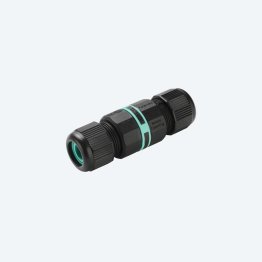
In-line connections
Use an in-line joint when two cable sections must be connected end to end. This arrangement is common in outdoor lighting, buried cable runs, machinery wiring, and equipment extensions.
Confirm:
Number of conductors
Cable diameter
Conductor construction
Required terminal method
Available installation space
Environmental exposure
Techno’s TH391 family, for example, includes compact mini joint connector configurations with screw, piercing, and waterproof variants listed for IP68 applications. Final selection must be based on the specific part number and cable requirements.
T and Y junctions
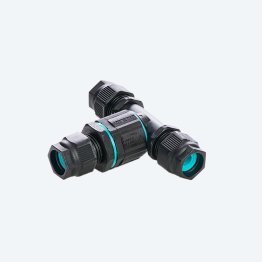
T and Y connectors allow a main cable to branch to another device or circuit. They can reduce the need for separate junction boxes and may simplify routing in lighting, sensor, irrigation, and control installations.
Techno’s TH390 and TH402 families include T-junction configurations. The Techno product catalog also lists TH392U Y-junction configurations with protection ratings that vary by part number.
Use the branch geometry to support a clean cable layout. Avoid forcing cables into a connector from an angle that places stress on the housing or seal.
Junction boxes
A junction box may be a better choice when multiple cables must be organized in one location or when the installation requires more internal space.
Techno offers junction boxes for multiple cable paths, conductor counts, and protection levels. Some product families are intended for compact installations, while others provide additional room for branching and terminal access.
Review Techno’s joint connector catalog and junction connection solutions to compare available configurations.
Materials and Installation Details
Material selection affects dimensional stability, impact resistance, chemical compatibility, and long-term sealing performance.
When evaluating a connector, review:
Housing material
Seal and gasket material
Terminal material and finish
Cable jacket compatibility
Resistance to oils, cleaning agents, and chemicals
UV exposure
Mechanical impact requirements
Installation temperature and method
The cable itself is equally important. A waterproof connector cannot compensate for a cable jacket that is incompatible with the sealing system or degraded by the application environment.
Installation quality also determines field performance. Follow the manufacturer’s assembly instructions. Prepare cable ends carefully. Avoid nicking insulation. Use the specified conductor preparation method. Tighten terminals and housing components according to the applicable instructions.
Where the connector is re-inspectable, protect the joint from repeated unnecessary opening. Each service event should preserve the sealing interface and follow the product’s approved reassembly process.
Techno provides assembly instructions and technical documents through its website. For application-specific requirements, contact CTM and Techno before finalizing the design.
Consider Moisture Inside the Cable
Water does not always enter from the outside. Moisture can also migrate through or along the cable, particularly in long outdoor runs or humid installations.
This is where anti-condensation features may become important. Techno offers xDRY® configurations within its joint connector portfolio. These products are intended to address moisture transmission and condensation concerns in selected applications.
An anti-condensation design may be relevant for:
Long outdoor cable runs
Humid industrial locations
Underground connections
Outdoor lighting systems
Irrigation and agricultural equipment
Equipment exposed to temperature cycling
The correct choice depends on the cable construction, installation orientation, environment, and downstream equipment. Treat xDRY® as an application-specific design option, not a universal replacement for proper cable routing and sealing.
Design-In Benefits: Reduce Redesign Risk
Rugged connectivity decisions affect more than the cable assembly. They can influence enclosure size, installation time, service access, BOM cost, certification requirements, and system reliability.
Selecting the connector early helps the engineering team confirm:
Cable routing and bend radius
Space requirements
Assembly sequence
Terminal access
Strain-relief strategy
Ingress protection
Certification needs
Field service expectations
Product availability and lifecycle support
Late-stage connector changes can create avoidable redesign work. A new connector may require a different cable diameter, housing opening, mounting method, terminal layout, or assembly procedure.
This is why engineers benefit from involving a technical partner during the initial design-in phase. A qualified review can identify missing requirements before the design is released.
CTM: Technical Support in the Rocky Mountain Region
CTM Marketing, Inc. is a design-driven manufacturers representative and technical sales agency serving Arizona, Colorado, Idaho, Montana, New Mexico, Utah, and Wyoming.
Our role is to connect engineering requirements with the right manufacturer solution. As a component sales representative, CTM supports the evaluation process with product knowledge, application questions, samples, documentation, and communication with the manufacturer.
For Techno joint connectors, we can help review:
Application environment
Cable size and construction
In-line or branch geometry
Required ingress protection
Terminal configuration
Anti-condensation requirements
Installation and service needs
Certification and documentation requirements
Techno’s catalog contains a broad range of configurations. The best part is determined by the application: not by a general product family name or protection rating.
Review Techno’s product categories, then contact CTM before you lock the design.
Let’s Chat!
A waterproof joint connector is a small component with a large role in field reliability.
If your design includes outdoor wiring, industrial equipment, infrastructure, lighting, renewable energy, agriculture, irrigation, or other harsh-environment applications, involve CTM early.
Send us your cable details, environmental conditions, connection layout, and electrical requirements. We will help identify the right Techno solution for further application review.
Contact CTM Marketing for design support in the Rocky Mountain region.
Let’s build a connection that performs from prototype through production and field service.
Comments